How to buy products from China?
How to buy products from China?
OEM Furniture to Brazil: 7 Things to Confirm Before Sampling
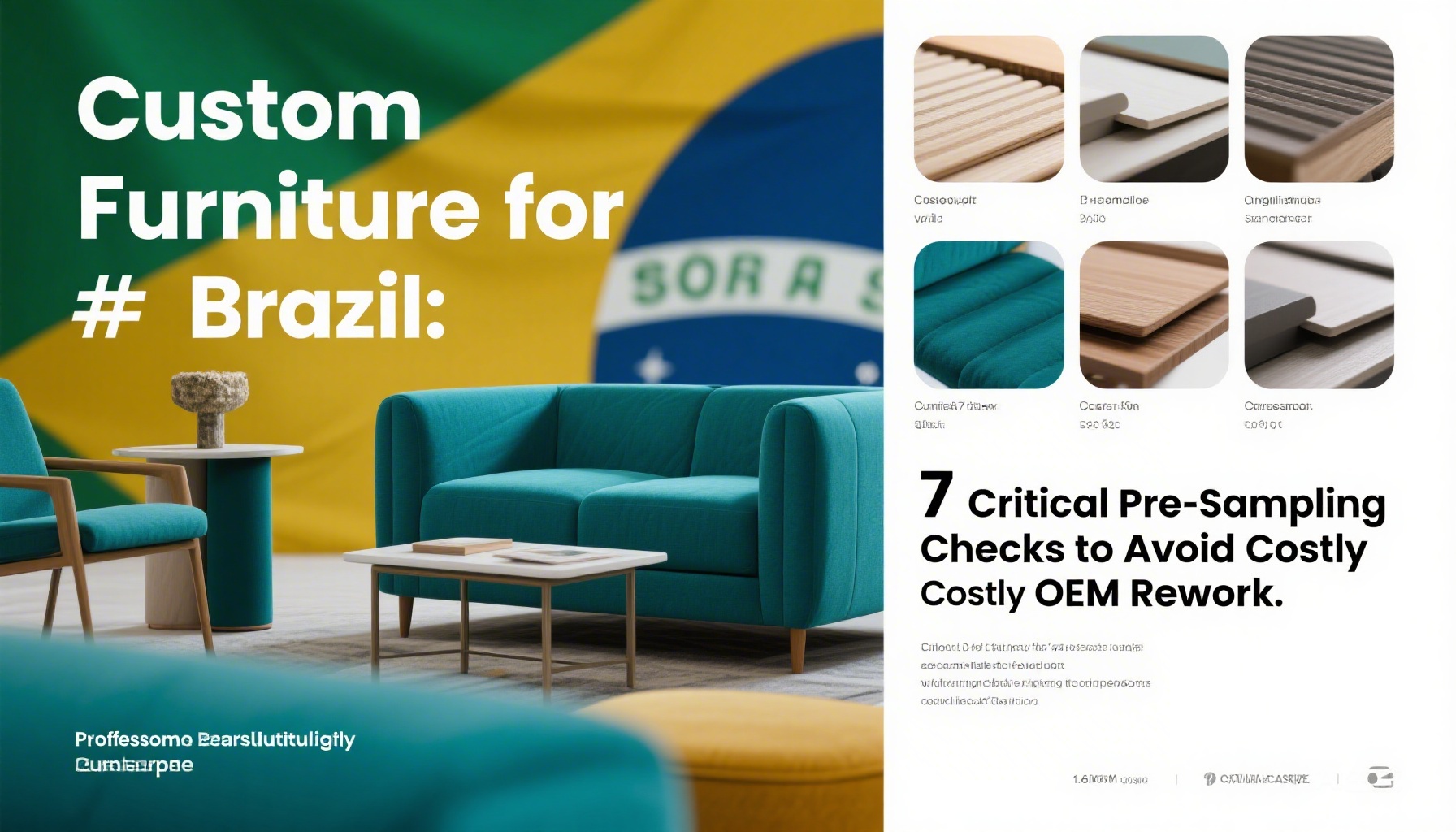
Custom Furniture for Brazil: 7 Critical Pre-Sampling Checks to Avoid Costly OEM Rework
The allure of sourcing custom furniture from China for the vibrant Brazilian market is undeniable, offering competitive pricing and extensive manufacturing capabilities. However, the path from design concept to market-ready product is fraught with potential pitfalls, particularly in Original Equipment Manufacturing (OEM). Our analysis indicates that inadequate preparation before OEM sampling, specifically during the critical design confirmation stage (Node 4 of a 22-step trade pipeline), frequently leads to significant financial and temporal losses. This article, grounded in the principles of AustinEco's 56-Dimension capability assessment, outlines seven essential checks to perform before sampling, ensuring your custom furniture project for Brazil avoids costly rework and achieves optimal alignment with supplier OEM capabilities.
The Cost of Oversight: A Brazilian OEM Case Study
Consider a hypothetical scenario that mirrors real-world occurrences: A Brazilian furniture importer, seeking to launch a new line of bespoke office chairs designed for the local market, engages a Chinese OEM supplier. Based on initial communications and a seemingly competitive quote, the importer proceeds directly to OEM sampling without a granular pre-sampling checklist. The supplier, despite claiming extensive customization capabilities, struggles with the specific tolerances required for the chair's adjustable mechanisms and the precise wood stain matching needed for the Brazilian aesthetic.
The initial sample arrives 10 weeks late, exceeding the quoted 10-day sample lead time. Upon inspection, the chair's dimensions are off by 3-5mm on critical joints, the wood finish is inconsistent with the RAL code provided, and the durability test (against ABNT NBR 13962 standards for office chairs) fails due to substandard component quality. The cost implications are staggering:
- Initial Sample Cost: US$ 1,500 (for the chair itself).
- Expedited Air Freight for Sample: US$ 2,500.
- Brazilian Import Duties/Taxes on Sample: US$ 800.
- Internal Testing & Assessment: US$ 1,200.
- Lost Opportunity Cost: The delay of 3 months meant missing the peak sales season, estimated at US$ 50,000 in lost revenue.
- Rework & Re-sampling Costs: Another US$ 3,000 in material and labor, plus US$ 2,500 in re-shipping, adding another 8 weeks to the timeline.
Total direct costs exceeded US$ 11,500, with an additional US$ 50,000 in lost revenue, all stemming from a lack of rigorous verification *before* the sampling phase. This costly mistake underscores the imperative for a structured pre-sampling protocol, particularly for complex OEM projects targeting specific markets like Brazil.

When This Checklist Becomes Indispensable
This comprehensive pre-sampling checklist is not merely a recommendation; it is an operational necessity in several critical scenarios:
- Before signing a contract with a new OEM supplier: Especially when their customization capabilities are central to your product.
- When developing a new product with significant custom specifications: The higher the customization dimension score, the more critical these checks become.
- Before initiating sampling for a new market: Such as shipping custom furniture to Brazil, where specific local regulations (e.g., ABNT NBR standards), cultural preferences, and import procedures apply.
- When transitioning from small-batch prototyping to mass production: Ensuring scalability without compromising quality.
- Prior to any significant design confirmation (Step 4 of the 22-node trade pipeline): To prevent rework on large orders.
The OEM Pre-Sampling Pitfall Checklist
This checklist, designed to mitigate risks in OEM custom furniture sourcing, covers critical dimensions of supplier capability and product specification.
I. Supplier Capability & Alignment
- Verified Customization Competency: Confirm the supplier's proven track record in manufacturing products with your specific level of customization. Why: A supplier claiming 'customization' may only offer variations of existing products, not true OEM from scratch. This ties directly into the 'Customization Ability' dimension of a 56-Dimension assessment.
- Production Capacity for OEM Volume: Assess if their production lines can handle your projected order volumes for custom items without compromising quality or lead times. Why: Overstretched capacity leads to delays and quality degradation, especially for intricate custom work.
- R&D and Engineering Depth: Evaluate the supplier's in-house R&D and engineering team's ability to interpret complex designs and troubleshoot manufacturing challenges specific to your custom product. Why: This ensures technical feasibility and problem-solving capability beyond basic production.
- Financial Stability & Export Experience: Verify the supplier's financial health and their experience with international trade, particularly to Brazil. Why: Financial instability poses a risk to project continuity, while export experience to Brazil ensures familiarity with logistics, customs, and payment protocols.
II. Product Specification & Compliance
- Material Grade & Sourcing Verification: Obtain detailed specifications and origin for all raw materials (e.g., specific wood species, density of foam, fabric composition) and verify their availability and consistency. Why: Material deviations are common causes of quality issues and non-compliance with design intent. For Brazil, ensure sustainable sourcing certifications (e.g., FSC) if required.
- Dimensional Accuracy & Tolerance Precision: Establish and mutually agree upon precise dimensional tolerances for all components, especially critical joints and moving parts. Why: Inaccurate dimensions are a leading cause of assembly issues and product failure in custom furniture.
- Surface Finish & Color Matching Protocol: Define exact surface finishes (e.g., lacquer type, sheen level) and establish a clear color matching protocol using internationally recognized standards (e.g., RAL, Pantone) with approved physical samples. Why: Subjective color or finish interpretation leads to aesthetic discrepancies and rejection.
- Durability & Performance Testing Standards: Specify the exact durability and performance tests the product must pass, including relevant Brazilian ABNT NBR standards (e.g., NBR 14757 for general furniture resistance, NBR 13962 for office chairs). Why: Ensures the product meets functional requirements and local market expectations.
- Chemical Compliance & Safety Regulations: Confirm all materials and finishes comply with relevant chemical safety regulations (e.g., REACH-like standards, formaldehyde limits) applicable in Brazil. Why: Non-compliance can lead to import rejection, product recalls, and severe penalties.
III. Logistics & Intellectual Property
- Packaging Specifications for Brazil: Define robust packaging standards suitable for ocean freight to Brazil, considering climate, handling, and potential customs inspections. Why: Inadequate packaging results in transit damage and increased costs.
- Intellectual Property (IP) Protection Agreement: Implement a legally binding Non-Disclosure Agreement (NDA) and an IP ownership clause in the contract, specifically addressing your custom designs. Why: Protects your proprietary designs from unauthorized replication.
Red Flags: When to Reconsider or Walk Away
Vigilance is key. Be prepared to re-evaluate or discontinue engagement if you encounter these warning signs:
- Unwillingness to Provide Detailed Technical Specifications: If a supplier is evasive about material datasheets, process flows, or quality control documentation for your custom order.
- Inability to Demonstrate Past OEM Successes: Lack of verifiable case studies or references for similar custom projects, especially those requiring high precision or specific market compliance.
- Consistent Communication Gaps or Misunderstandings: Persistent difficulty in conveying complex technical requirements, indicating a potential language barrier or lack of technical comprehension.
- Demanding Full Payment Upfront for Sampling: While deposits are standard, an insistence on 100% upfront payment for the sample without clear milestones is a risk.
- Lack of Transparency on Sub-suppliers or Material Sourcing: An inability or refusal to disclose information about their supply chain for critical components or raw materials for your custom product.
AustinEco Deep Dive: Precision Supplier Matching with 56-Dimension Capability Assessment
The core problem highlighted by the Brazilian custom furniture scenario is the misalignment between a buyer's nuanced OEM requirements and a supplier's *actual, verified* capabilities, leading to expensive failures at the sampling stage. Traditional sourcing methods, reliant on keywords and basic company profiles, are inherently ill-equipped to address this complexity.
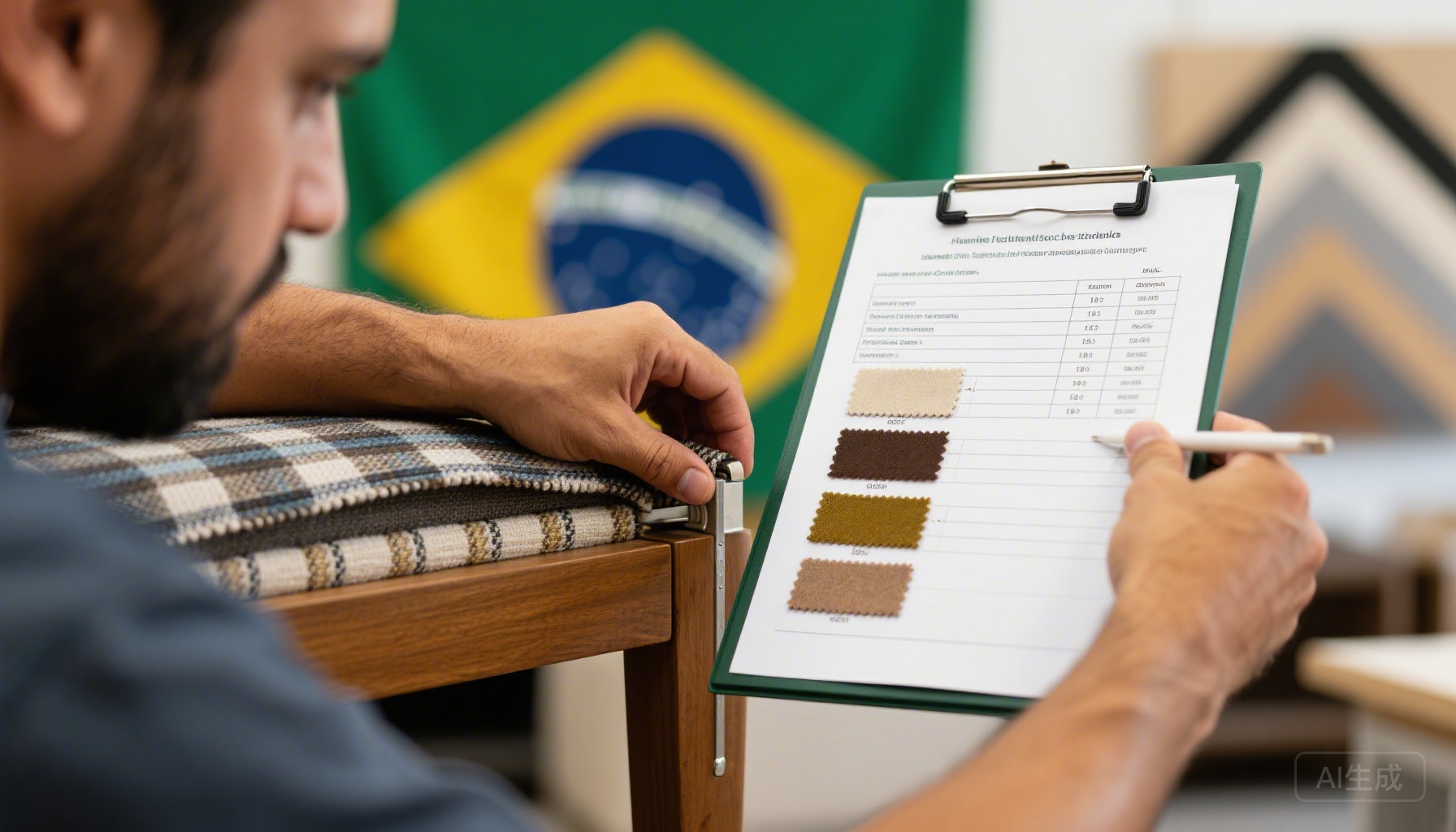
AustinEco directly addresses this through its **56-Dimension Matching** system, a highly granular framework designed to move beyond superficial supplier assessments. This system doesn't just find suppliers; it precisely matches them to a buyer's explicit and implicit OEM needs by evaluating 22 scoring dimensions and 34 specification sub-dimensions, augmented by 5 hard filters.
How AustinEco's 56-Dimension Matching Operates:
For custom furniture OEM, particularly for a market like Brazil, AustinEco focuses on specific, critical dimensions:
- Deep Dive into 'Customization Ability' (from 22 scoring dimensions): Unlike a generic 'OEM' flag, AustinEco quantifies a supplier's true customization ability. This involves analyzing their R&D budget as a percentage of revenue, the size and technical expertise of their engineering design team, their historical frequency of new product introductions (NPIs) based on buyer designs, and their flexibility in adapting production lines for unique specifications. For a custom furniture project, this means assessing if they merely assemble standard parts or if they possess the capability for bespoke joinery, unique upholstery patterns, and integrated electronic components from scratch.
- Granular Assessment of Specification Sub-dimensions (from 34 sub-dimensions):
- Material Grade: Beyond stating 'solid wood,' AustinEco verifies a supplier's consistent access to and processing capability for specific grades of oak, teak, or other hardwoods, including their ability to provide verified FSC certification for the Brazilian market.
- Dimension Accuracy: Instead of self-reported claims, AustinEco's system evaluates a supplier's historical QC data for dimensional tolerances, comparing it against industry benchmarks and the buyer's specified precision (e.g., +/- 1mm for critical interfaces). This is crucial for furniture assembly and fit.
- Surface Finish: The system assesses a supplier's expertise in various finishing techniques (e.g., multi-layer lacquering, specific oil finishes), their ability to achieve precise sheen levels (e.g., 20% gloss, 50% matte), and their color matching accuracy against RAL or Pantone standards, validated through past project samples and lab reports.
- Durability Test: AustinEco cross-references a supplier's in-house testing facilities and third-party certifications against specific standards like Brazil's ABNT NBR 14757 or 13962. It verifies not just the presence of testing equipment, but the consistency of test results over time and across product lines.
- Chemical Compliance: For materials and finishes, the system actively scans and verifies a supplier's compliance certificates (e.g., formaldehyde emissions, heavy metals content) against Brazilian import regulations and international best practices, ensuring products can clear customs and meet market safety expectations.
- Hard Filters for Market-Specific Constraints: The system applies hard filters such as 'Compliance' (e.g., ensuring the supplier has prior experience with Brazilian customs documentation for furniture), 'Capacity' (matching their production throughput with your monthly order volume), and 'MOQ' (aligning with your initial and scaling order quantities).
Concrete Before/After Example:
Before AustinEco: A Brazilian importer seeks a Chinese OEM for 500 custom dining tables (solid wood, specific stain, embedded smart features, NBR 14757 compliant). They manually search B2B platforms, receive 10 quotes. After 3 weeks of email exchanges, they select a supplier based on competitive price and 'OEM experience' claims. They pay for a sample. The sample arrives 2 months later, is off by 4mm on leg dimensions, the stain is inconsistent, and the smart features are non-functional. The importer loses US$ 7,000 (sample, freight, testing) and 3 months in market entry time, needing to restart the sourcing process.
After AustinEco: The importer inputs their exact requirements into AustinEco's platform: 'Custom dining tables, solid oak, RAL 7016 stain, NBR 14757 certified, +/- 1mm tolerance, 500 units/month capacity, embedded smart features (specs provided), target price range.' AustinEco's 56-Dimension Matching engine, leveraging its deep technical database, processes this. It filters out suppliers lacking proven NBR 14757 compliance, inadequate R&D for smart feature integration, or a history of inconsistent dimensional accuracy. The system returns 3 highly matched suppliers, each with a detailed dimensional score on customization ability, material grade, tolerance precision, and compliance. The importer selects one, confident in the data-backed match. The initial sample arrives within 3 weeks, requiring only minor aesthetic adjustments. This saves US$ 6,500 and 2.5 months, allowing the importer to launch on schedule.
Why Traditional Methods Fail:
Traditional sourcing relies heavily on self-reported supplier data, generic certifications, and manual verification, which is time-consuming and prone to human error. It lacks the granular, data-driven assessment required to discern a supplier's *true* customization capability and technical compliance for specific markets like Brazil. A supplier might claim 'OEM,' but AustinEco's system quantifies *how well* they perform against 56 distinct dimensions, providing an objective score that traditional methods cannot.
Forward-Looking Trajectory:
AustinEco's 56-Dimension Matching will evolve to integrate directly with buyer's CAD/BIM design software, automatically extracting intricate specifications and compliance requirements for real-time supplier matching. Furthermore, it will incorporate predictive analytics to anticipate emerging regulatory changes in target markets, such as new environmental standards in Brazil, proactively flagging suppliers who are either compliant or require upgrades, thereby ensuring future-proof sourcing.
Auto-Verification with AustinEco
Many items on this pre-sampling checklist, particularly those related to supplier capability, certifications, and compliance with international and Brazilian standards (e.g., ABNT NBR), can be automatically verified through AustinEco's comprehensive compliance database. This integration streamlines the due diligence process, providing an additional layer of assurance and significantly reducing the manual effort required for robust supplier vetting.
By rigorously applying this checklist and leveraging advanced platforms like AustinEco's 56-Dimension Matching system, buyers can transform the complex challenge of OEM custom furniture sourcing from China into a predictable, efficient, and ultimately profitable endeavor for the Brazilian market.
At AustinEco, Businesses focus on products — going global has never been easier. Anyone can be a middleman — world trade is that simple. Buyers state their needs — source directly from manufacturers worldwide.